
1-Step vs. 2-Step vs. 3-Step Paint Correction Explained
Understand the differences between 1-step, 2-step, and 3-step paint correction. Learn which level is right for your vehicle's condition and your goals.

Co-founder of Gemstar Eagle with 15+ years in professional auto detailing.
Many owners hear the term paint correction and instantly assume it requires an intense, multi-day sanding session.
We see this confusion often, which is exactly why having 1-Step vs. 2-Step vs. 3-Step Paint Correction Explained is so critical for modern vehicle owners.
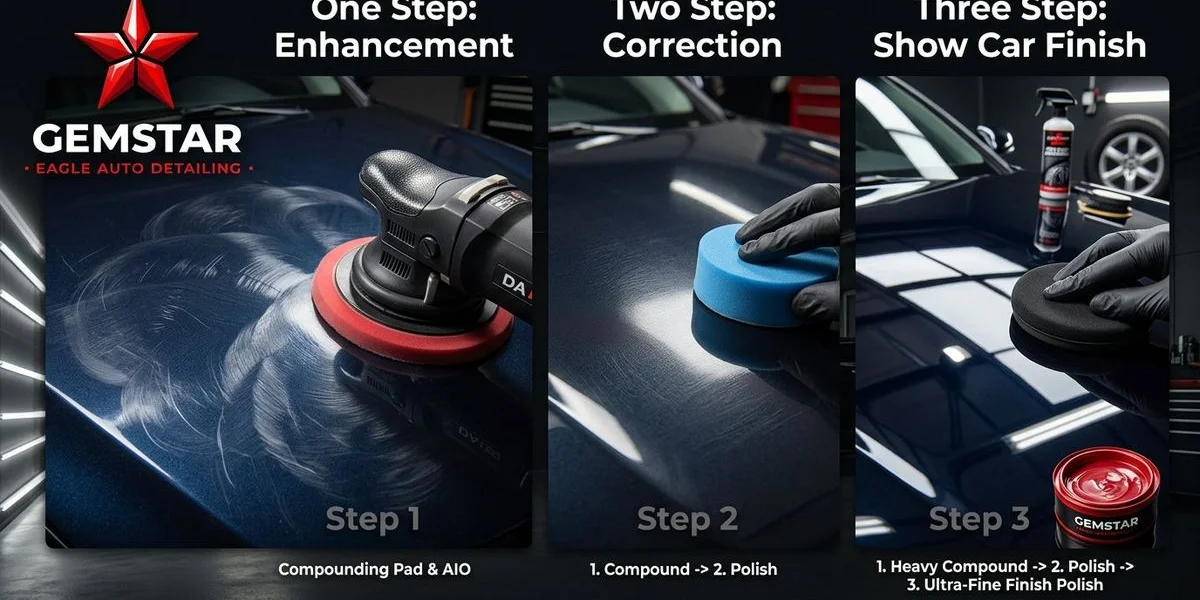
These terms describe the specific number of polishing stages used to restore your vehicle’s paint, and each level delivers completely different results.
Understanding these differences will help you make an informed decision about which service is right for your vehicle.
At Gemstar Eagle Auto Detailing our technicians offer all three levels.
We guide our Eagle and Treasure Valley clients toward the exact option that matches their paint condition and goals.
Let’s look at the data, what it is actually telling us about clear coat safety, and then explore how to choose the right approach.
1-Step vs. 2-Step vs. 3-Step Paint Correction Explained: The Basics
Before looking at the specific levels, it helps to understand what happens during any paint correction process. A machine polisher, such as a high-end Rupes or Flex dual-action tool, is used with specialized pads and compounds to remove a microscopic layer of clear coat. This process levels out the surface, eliminating imperfections like swirl marks, scratches, water spot etching, and oxidation.
According to automotive paint standards, the average modern clear coat is surprisingly thin, measuring only 35 to 50 microns thick.
We strictly adhere to the manufacturer guideline that no more than 25 percent of a clear coat (about 10 to 12 microns) should ever be removed during a vehicle’s lifetime. Removing too much material compromises the paint’s UV protection and risks total clear coat failure. The aggressiveness of the compound, the firmness of the pad, and the number of passes determine how much material is removed and how refined the final finish will be. More steps mean more refinement, but they also require more time and cost.
| Paint Layer | Average Thickness | Detailer’s Note |
|---|---|---|
| Primer | 25-30 microns | Base layer, never touched during polishing. |
| Color Coat | 15-25 microns | Gives the car its hue, lies beneath the clear coat. |
| Clear Coat | 35-50 microns | The protective top layer where all correction happens. |
| Max Safe Removal | 10-12 microns | Exceeding this risks UV damage and paint failure. |
One-Step Paint Correction
What It Is
A one-step correction uses a single compound and pad combination to both cut through defects and refine the finish in one pass. Modern all-in-one compounds, like Koch Chemie F6 or Griot’s Garage Complete Compound, have improved dramatically in recent years. These advanced abrasives break down as they are worked into the surface, delivering impressive results on paint that is in reasonably good condition.
What It Achieves
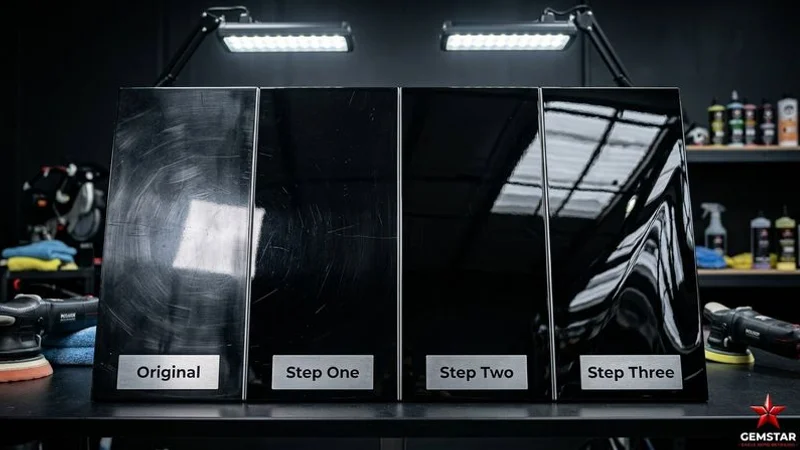
Expect approximately 60 to 75 percent defect removal from this single stage. Our standard one-step process typically removes only 1 to 2 microns of clear coat, making it an incredibly safe option for annual maintenance. This service effectively addresses:
- Light swirl marks from automatic washes
- Minor haze and surface-level dullness
- Superficial imperfections
Deeper scratches and heavy defects will be improved but may not be fully removed.
Who It Is For
One-step correction is ideal for newer vehicles with light defects, vehicles being prepared for sale, or clients who want a noticeable improvement without the investment of a full multi-step correction. It is also the minimum level of correction we recommend before applying ceramic coating.
Time and Cost
A one-step correction typically takes four to six hours for a standard sedan. Here in the Treasure Valley, pricing for a high-quality one-step service generally starts between $300 and $350. It is the most affordable paint correction option and provides excellent value for vehicles in decent condition.

Two-Step Paint Correction
What It Is
A two-step correction uses two distinct stages to tackle tougher damage. The first stage involves a more aggressive cutting compound and a firmer pad, such as a microfiber or wool disc, to remove deeper defects. The second stage uses a finer finishing polish and a softer foam pad to refine the surface and eliminate any microscopic haze left by the initial cutting stage.
What It Achieves
Expect approximately 80 to 95 percent defect removal with this approach. The finish after a proper two-step correction is dramatically better than what a one-step can deliver, usually removing about 3 to 5 microns of damaged clear coat. Two-step correction handles:
- Moderate to heavy swirl marks
- Visible wash marring
- Light to moderate scratches
- Water spot etching
Who It Is For
This is our most commonly recommended service for daily drivers in the Treasure Valley. Most vehicles that have been driven for a year or more and washed through automatic car washes benefit enormously from a two-step correction. It hits the perfect balance between cost and transformative results for the majority of our clients.
Time and Cost
A two-step correction typically takes eight to twelve hours for a standard sedan, often spanning two full working days. The extra time and product make it more expensive than a one-step, with comprehensive packages often starting around $1,200 depending on vehicle size. The results absolutely justify the investment for vehicles with visible wear.
Three-Step Paint Correction
What It Is
A three-step correction adds an additional cutting or intermediate stage before the final finishing polish. The first stage uses a heavy cutting compound to address severe defects. The second stage uses a medium compound to refine the results and tackle remaining moderate defects. The third stage uses an ultra-fine finishing polish to achieve the highest possible level of clarity and gloss.
What It Achieves
Expect 95 to 99 percent defect removal, which is the closest thing to flawless paint that polishing can achieve. A full three-step correction typically removes 6 to 10 microns of clear coat, which is why it should only be performed rarely. The depth, clarity, and mirror-like reflection after this intensive process is truly stunning and often surpasses the finish the vehicle had when it rolled off the factory line.
Who It Is For
Three-step correction is strictly reserved for vehicles with severely damaged paint, show cars, exotic and luxury vehicles, or clients who demand absolute perfection.
If you are investing in a premium ceramic coating and want the paint beneath it to be flawless, a three-step correction is the absolute gold standard.
Time and Cost
A three-step correction can easily take 15 to 25 hours or more depending on the vehicle’s size and condition. Some extensive corrections span three or four days in our shop. This is a significant financial investment, often exceeding $2,000, but for the right vehicle and the right owner, the results are completely transformative.
How We Determine What Your Vehicle Needs
We never recommend a correction level without first thoroughly inspecting the vehicle. This assessment process includes a rigid set of diagnostic steps to guarantee the safest approach:
- Thorough wash and decontamination to strip away waxes and reveal the true condition of the bare paint.
- Paint depth measurement using an electronic gauge, like a Defelsko Positector, to ensure there is sufficient clear coat (above 35 microns) to work with safely.
- High-intensity LED inspection using Scangrip detailing lights to identify and catalog every single type of defect present.
- Test spot polishing on a small, taped-off area to determine exactly how the specific paint system responds to different pad and compound combinations.
This precise process ensures we recommend the exact level for your specific vehicle.
We never upsell a three-step correction to someone whose paint only needs a one-step, and we refuse to underdeliver by performing a quick polish on paint that clearly needs multiple stages. Not sure if your vehicle needs correction at all? Read our post on the 5 signs your car needs paint correction.
Protecting Your Corrected Paint
Regardless of which correction level you choose, protecting the freshly leveled paint is absolutely essential.
Without protection, the bare clear coat is vulnerable, and those same swirl marks will return within weeks of normal driving and washing.
We strongly recommend pairing paint correction with a professional-grade ceramic coating, which can last anywhere from 3 to 7 years depending on the formula and maintenance.
At a minimum, a high-quality paint sealant should be applied to preserve your newly restored finish.
Whether you choose a quick enhancement or a flawless finish, having 1-Step vs. 2-Step vs. 3-Step Paint Correction Explained ensures you are making the smartest investment for your vehicle.
Learn more about our paint correction services and the specific protection options we offer to keep your car looking pristine.
Call Gemstar Eagle Auto Detailing at (208) 953-9102 to schedule your professional paint assessment today.

Tags
Related Service
Learn More About Our Paint Correction Service → About Justin
Co-Founder & Lead Detailing Specialist at Gemstar Eagle Auto Detailing
Co-founder of Gemstar Eagle with 15+ years in professional auto detailing.
Related Articles
Ceramic Coating vs. Wax: Why Eagle Residents Are Switching
Discover why more Eagle, Idaho drivers are choosing ceramic coating over traditional wax. Compare durability, protection, cost, and long-term value for your vehicle.
How Much Does Ceramic Coating Cost in Eagle, Idaho?
Get a clear breakdown of ceramic coating costs in Eagle, Idaho. Understand what affects pricing and how to choose the right package for your vehicle.
Do You Need Paint Correction Before Ceramic Coating?
Find out why paint correction before ceramic coating is essential for the best results and what happens if you skip this critical step.
Ready to Book Your Detail?
Put your knowledge into action. Schedule a premium mobile detail with Gemstar Eagle today.