
5 Signs Your Car Needs Paint Correction
Learn the five telltale signs that your vehicle's paint needs professional correction. Spot swirl marks, scratches, and oxidation before they worsen.

Co-founder of Gemstar Eagle with 15+ years in professional auto detailing.
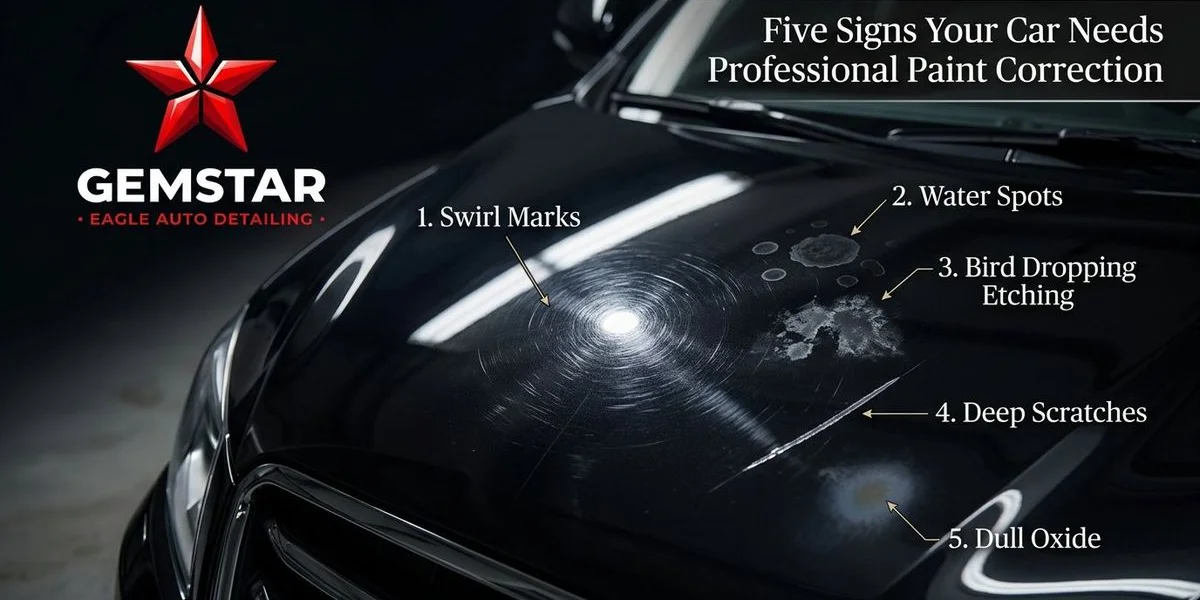
We see the reality of Ada County driving every single day at Gemstar Eagle Auto Detailing. The harsh sun, hard water, and aggressive road debris take a massive toll on vehicle finishes, eventually leading to the 5 signs your car needs paint correction.
You likely recognize the gradual fading over time. Identifying the exact moment normal wear crosses into permanent damage is the real challenge.
Our team evaluates paint condition on vehicles across the Treasure Valley constantly. Catching these microscopic defects early is the best way to avoid a costly trip to the body shop.
We will break down the five most common signs your car is overdue for a professional fix. Read on to discover the exact visual cues you need to look for today.
1. Visible Swirl Marks Under Direct Light
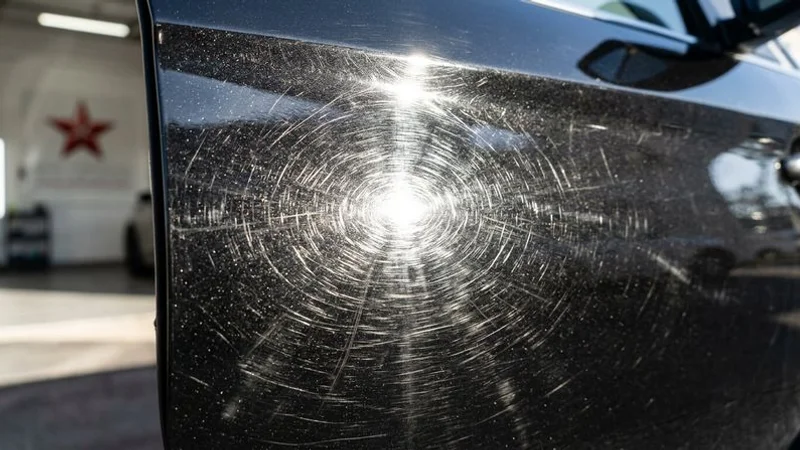
Swirl marks are the single most common paint defect we correct on vehicles in Eagle and Boise. They appear as a circular, spider web pattern when sunlight or artificial light hits the surface at a specific angle. You have probably noticed them on your own vehicle on a bright Idaho afternoon.
Our clients often wonder exactly where these frustrating scratches originate. The primary culprits usually involve improper washing techniques that physically drag dirt across the finish.
Here are the most frequent causes of swirl marks:
- Automatic Tunnel Washes: Spinning nylon brushes trap grit from previous vehicles and whip it against your car at high speeds.
- Dirty Wash Mitts: Using the same sponge for your wheels and your hood transfers abrasive brake dust onto the paint.
- Improper Drying: Dragging a rough bath towel across the surface creates microscopic linear scratches.
- Dry Wiping: Rubbing dust off a dry car with a microfiber towel grinds dirt directly into the finish.
We constantly see newer vehicles with less than 15,000 miles displaying severe marring from these bad habits. A 2025 detailing industry review highlighted how quickly automatic washes degrade factory finishes, noting that even touchless systems use high alkaline chemicals that strip away protective sealants.
Once this web of fine scratches covers your panels, hand waxing will simply hide them temporarily. Professional machine polishing is the only effective method to level the surface and eliminate them permanently.
2. Faded or Dull Paint That Won’t Shine
If you wash your vehicle and it still looks dull, the clear coat has likely suffered oxidation damage. Oxidation happens when UV radiation breaks down the molecular structure of the top layer. This damage causes the paint to become hazy and lose its sharp reflective properties.
Our high-altitude sun in Idaho is notoriously harsh on exterior surfaces. Vehicles parked outside in the Treasure Valley develop oxidation much faster than those kept in climate controlled garages.
The science behind this fading comes down to the actual thickness of your paint. According to a 2025 detailing guide from OCDCarCare, modern factory clear coats average just 38 to 50 microns thick.
“Most modern vehicle paint clear coat thickness ranges from 38 to 50 microns. Thinner factory clear coat levels mean less detailing paint correction services may be performed over the lifespan of new vehicles.” - OCDCarCare Automotive Guide
We want to put that tiny measurement into practical perspective. A standard piece of copy paper is about 89 microns thick, making your protective layer incredibly fragile.
Treating Oxidation Before It Spreads
Our team highly recommends addressing hazing early through professional machine polishing. Red, black, and dark blue colors absorb more heat and show this chemical failure most dramatically.
Light to moderate oxidation is easily corrected by safely removing just 1 to 2 microns of dead material. Severe neglect requires heavy compounding, which removes more clear coat and pushes you closer to permanent failure.
Taking action quickly guarantees the best chance of a flawless restoration. Delaying treatment often means the clear coat burns through entirely.
3. Water Spots That Will Not Come Off
Fresh water spots form when mineral laden water evaporates from the paint, leaving behind stubborn deposits. We all deal with this annoying issue after a quick summer rain or a misaligned lawn sprinkler.
In Eagle and surrounding areas, our hard water makes this an especially destructive problem. Local water quality data shows the average water hardness in Eagle and Boise ranges from 79 to over 150 parts per million (PPM) of dissolved calcium and magnesium.
Our detailers see the damage these high mineral concentrations cause daily. When those heavy minerals bake into your clear coat on a 90 degree summer afternoon, they physically etch craters into the surface.
You can usually remove fresh spots with a mild white vinegar solution or a dedicated detail spray. Leaving them on the paint for weeks allows the minerals to eat into the finish permanently.
These etched spots appear as rough, visible rings that regular washing cannot budge. Here is a quick breakdown of how water spot damage progresses:
| Stage of Damage | Characteristics | Required Fix |
|---|---|---|
| Stage 1 (Fresh) | Loose mineral deposits sitting on top of the paint. | Vinegar solution or standard car wash. |
| Stage 2 (Bonded) | Minerals have adhered tightly to the clear coat surface. | Chemical decontamination or clay bar treatment. |
| Stage 3 (Etched) | Minerals have eaten physical craters into the clear coat. | Professional machine paint correction. |
We utilize specialized polishing compounds to safely level the clear coat around those Stage 3 craters. This process shaves down the surrounding high points until the surface is uniform and smooth again.
The longer you ignore hard water deposits, the deeper they etch into the finish. Catching the problem early prevents the need for aggressive, heavy compounding.
4. Scratches from Everyday Contact
Scratches come from countless daily hazards like keys, shopping carts, tree branches, and careless people in parking lots. Living near busy retail areas like the Village at Meridian guarantees occasional door dings and contact marks.
Our customers frequently ask if a specific scratch requires a touch up pen or a full machine polish. You can perform a quick assessment at home using the standard industry fingernail test.
Run your fingernail perpendicular across the visible scratch to determine its severity:
- The Gliding Test: If your nail passes over the mark smoothly, the damage is confined to the clear coat and can be polished out.
- The Catching Test: If your nail catches in the groove, the scratch has breached the incredibly thin 50 micron clear coat and requires touch up paint.
This quick assessment saves you from guessing about the required repair method.
The True Cost of Ignoring Scratches
We highly recommend correcting surface level scratches before they multiply and ruin the panel’s appearance. Fixing a minor blemish through professional polishing is incredibly cost effective compared to traditional body shop repairs.
According to 2026 auto collision repair data, repainting a single car door averages between $400 and $1,200. A full standard vehicle repaint runs anywhere from $1,000 to $4,500.
Professional paint correction costs a fraction of those body shop prices. Regular maintenance keeps minor parking lot blemishes from accumulating into a tired, neglected finish.

5. Your Paint Feels Rough to the Touch
Clean exterior paint should feel as smooth as glass when you glide your fingertips across the hood. If the surface feels gritty or textured immediately after a wash, you have bonded contaminants embedded in the clear coat.
Our detailing technicians find these tiny particles on nearly every untreated vehicle in Ada County. The Treasure Valley experiences constant commercial construction, which releases airborne industrial fallout that settles on parked cars.
Brake dust, rail dust, and tree sap residue also bond to the clear coat at a microscopic level. Standard car wash soaps simply glide over these stubborn iron and carbon particles.
How to Reveal Hidden Contamination
We teach our clients a simple trick called the “Baggie Test” to uncover microscopic paint defects. Here is how you can perform it in your own driveway:
- Wash and Dry: Thoroughly clean a single panel, like the hood, to remove loose dirt.
- Grab a Bag: Place your hand inside a standard, thin plastic sandwich bag.
- Glide and Feel: Gently slide your plastic covered fingers across the clean paint surface.
The thin plastic severely amplifies the tactile feedback from the clear coat, revealing every microscopic bump your bare hand missed. If the surface feels like fine sandpaper through the bag, a thorough decontamination is absolutely necessary.
Our detailing process always begins with a chemical iron remover and a physical clay bar treatment to extract these embedded particles. Skipping this vital step means a spinning polishing pad will simply grind gritty brake dust directly into your delicate finish.
Acting Early on the 5 Signs Your Car Needs Paint Correction
Every single defect on your paint represents an area where the clear coat is actively failing. Leaving swirl marks, deep scratches, and oxidation untreated allows the damage to expand and worsen over time.
Our detailing specialists want you to view your paint as a consumable layer of armor. Addressing issues early provides several financial and aesthetic benefits:
- Preserves Factory Paint: You maintain the original, high quality OEM finish.
- Reduces Repair Costs: Polishing is significantly cheaper than a body shop repaint.
- Maximizes Resale Value: A flawless exterior commands top dollar on the used market.
Once that protective layer is completely worn through, polishing is no longer a viable option. A total clear coat failure forces you to seek an expensive, full panel replacement.
Regular professional maintenance removes minimal material while permanently eliminating the visual defects. We highly recommend pairing this corrective work with modern protective treatments, especially before the cold months set in. Our guide on how to protect your car’s paint from Idaho winters covers everything you need to know.
Applying a durable ceramic coating locks in that flawless finish. This advanced liquid polymer shields your newly corrected clear coat from future UV damage and hard water etching.

Get a Professional Assessment
If you have noticed any of these 5 signs your car needs paint correction on your personal vehicle, do not wait for the damage to spread. We strongly encourage you to schedule a comprehensive paint inspection at Gemstar Eagle Auto Detailing.
The inspection process allows us to carefully assess your paint thickness under professional studio lighting.
Our team will then recommend the exact, safest level of correction required to restore a brilliant shine. Visit our dedicated paint correction page to explore our specific processes, or call our local office directly at (208) 953-9102 to book your personalized appointment today.
Tags
Related Service
Learn More About Our Paint Correction Service → About Justin
Co-Founder & Lead Detailing Specialist at Gemstar Eagle Auto Detailing
Co-founder of Gemstar Eagle with 15+ years in professional auto detailing.
Related Articles
Ceramic Coating vs. Wax: Why Eagle Residents Are Switching
Discover why more Eagle, Idaho drivers are choosing ceramic coating over traditional wax. Compare durability, protection, cost, and long-term value for your vehicle.
How Much Does Ceramic Coating Cost in Eagle, Idaho?
Get a clear breakdown of ceramic coating costs in Eagle, Idaho. Understand what affects pricing and how to choose the right package for your vehicle.
Do You Need Paint Correction Before Ceramic Coating?
Find out why paint correction before ceramic coating is essential for the best results and what happens if you skip this critical step.
Ready to Book Your Detail?
Put your knowledge into action. Schedule a premium mobile detail with Gemstar Eagle today.