
Ceramic Tint vs. Dyed Tint: Which Is Worth It?
Compare ceramic and dyed window tint options for your vehicle. Understand the differences in heat rejection, UV protection, durability, and value.

Co-founder of Gemstar Eagle with 15+ years in professional auto detailing.

Every summer, standard factory glass becomes the dividing line between an average commute and true driving comfort. Clients often ask us about ceramic tint vs. dyed tint: which is worth it?
We understand that protecting your vehicle investment means looking beyond basic aesthetics. Busy professionals and families in Ada County frequently ask us to explain the real difference between entry-level films and premium upgrades.
The data tells a clear story about performance.
Our professional service team at Gemstar Eagle Auto Detailing installs both types of films daily. You deserve clear facts before spending your hard-earned money.
Let’s examine the specific heat rejection metrics, compare the actual lifespans, and outline exactly which option makes the most financial sense for your car.
Understanding Dyed Window Tint
Dyed window tint remains the most affordable option on the market today. It consists of a layer of dye sandwiched between an adhesive base and a protective top coat.
We see many clients choose standard dyed options from brands like 3M FX Premium for basic shade. The dye simply absorbs solar energy to reduce the visible light passing through your glass.
This absorption method has distinct physical limitations. Let’s explore the pros and cons of this entry-level material.
Advantages of Dyed Tint
- Affordability: Dyed tint costs significantly less than advanced films, making it accessible for virtually any budget.
- Appearance: Darker shades provide a deep, matte-black aesthetic that many drivers prefer.
- Glare reduction: This film effectively lowers visible light transmission for a more comfortable driving experience.
- Privacy: The dark layers provide excellent privacy from outside viewers.
Limitations of Dyed Tint
- Poor heat rejection: Dyed tint absorbs heat instead of reflecting it. Industry data on basic dyed films shows they only achieve a Total Solar Energy Rejection (TSER) of around 20 to 30 percent.
- Inadequate UV protection: While dyed tint blocks a portion of ultraviolet rays, it lacks the comprehensive filtering required to stop interior fading.
- Fading and discoloration: UV exposure causes the organic dyes to break down. The material typically fades from black to a purple or brownish hue within three to five years.
- Bubbling: Lower-quality dyed films are prone to bubbling as the trapped heat degrades the adhesive backing.

Understanding Ceramic Window Tint
Ceramic window tint represents a massive leap in automotive protection technology. This material uses microscopic nano-ceramic particles embedded directly into the film layers.
Our installers prefer working with premium options like XPEL PRIME XR PLUS because the results are undeniable. These non-metallic and non-conductive particles deliver exceptional performance across every measurable category.
You get maximum climate control without any interference to your vehicle’s electronics.
Advantages of Ceramic Tint
- Superior heat rejection: Premium ceramic tint rejects up to 98 percent of infrared heat. This specific metric translates to a dramatically cooler cabin on scorching days.
- Medical-grade UV protection: Products like XPEL and 3M ceramic films carry the Skin Cancer Foundation Seal of Recommendation. They block 99 percent of harmful UV rays, functioning like an SPF 1,000 sunblock for your interior.
- No signal interference: Ceramic film will never disrupt cell phone signals, GPS navigation, radio frequencies, or toll transponders.
- Color stability: The nano-ceramic construction does not fade, turn purple, or change color.
- Shatter resistance: Ceramic film adds structural integrity to your glass, helping hold shattered pieces together during an impact.
- Longevity: High-quality ceramic tint routinely lasts 15 to 20 years, effectively covering the entire lifetime of your vehicle.
Limitations of Ceramic Tint
- Higher initial cost: Ceramic materials require a larger upfront investment. Upgrading a full vehicle can run several hundred dollars more than a dyed package.
- Installation difficulty: Applying thick ceramic film requires highly skilled technicians. The specialized material is notoriously unforgiving if handled incorrectly.
Performance Comparison for Idaho Conditions
Summer Heat
The Treasure Valley brings brutal summer temperatures. July averages a high of 92 degrees in Eagle, and those cloudless afternoons turn standard car interiors into ovens.
We recommend ceramic film specifically to combat this intense solar baking. A ceramic-tinted vehicle stays noticeably cooler because the film reflects the heat outward.
Clients consistently report using their air conditioning less often, cooling the cabin faster, and enjoying a much more comfortable commute. Dyed tint absorbs the heat, meaning a huge portion of that thermal energy still transfers directly onto your dashboard and seats.
Winter Glare
Both tint types reduce glare effectively during clear winter days. This protection makes winter driving much safer when the sun reflects off the snow-covered foothills around Ada County.
Snow acts like a mirror for solar radiation. Environmental data shows that fresh snow reflects up to 80 percent of UV rays, hitting your face and eyes from multiple angles.
Our team values ceramic tint here because it offers exceptional optical clarity. You get excellent daytime glare reduction while maintaining perfectly clear nighttime visibility.
UV Exposure
Idaho’s elevation creates a unique hazard for drivers. UV radiation increases by 4 to 5 percent for every 1,000 feet of elevation gain.
Eagle sits at roughly 2,566 feet above sea level, meaning your vehicle takes a harsher UV beating than cars in coastal cities. Ceramic tint’s 99 percent UV rejection prevents your leather seats from cracking and protects your family’s skin.
Dyed tint offers partial coverage, but it falls completely short of the comprehensive protection needed at this altitude.
Cost Analysis
Pricing varies based on your specific vehicle size and the number of windows. You can expect the following approximate price ranges for a typical sedan or SUV in Eagle.
We always encourage clients to look at the ten-year cost of ownership.
| Feature | Standard Dyed Tint | Premium Ceramic Tint |
|---|---|---|
| Initial Cost (Full Vehicle) | $150 to $350 | $400 to $800 |
| Infrared Heat Rejection | 10% to 20% | Up to 98% |
| Average Lifespan | 3 to 5 years | 15+ years (Lifetime) |
| Color Stability | Fades to purple | Will never fade |
While ceramic requires a larger upfront payment, the long-term math is highly favorable. A basic dyed tint will need replacement in three to five years due to severe fading or ugly bubbling.
Over a single ten-year ownership period, paying for one premium ceramic installation actually costs less than paying for three separate dyed tint replacements.
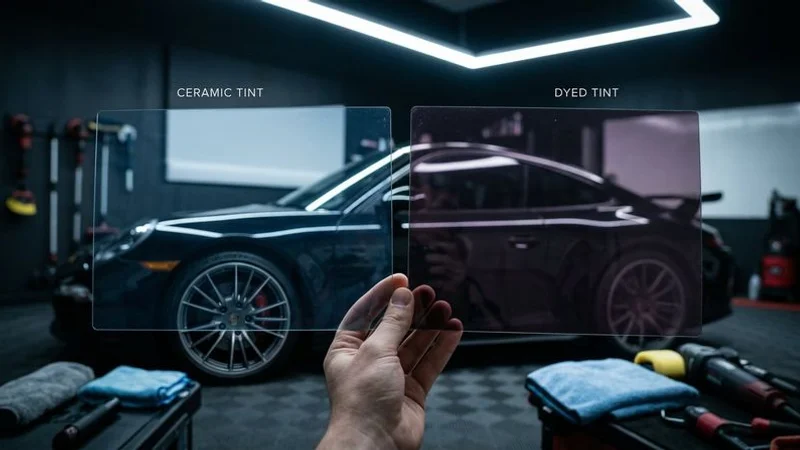
Ceramic Tint vs. Dyed Tint: Which Is Worth It?
For most drivers in the Treasure Valley, ceramic tint is the clear winner. The massive difference in heat rejection justifies the price gap entirely.
We want you to experience a cool, comfortable car every time you open the door in August. Combined with true UV protection, zero fading, and lifetime durability, ceramic delivers genuine value.
If your budget is tight and you need immediate relief, a quality dyed film is still a worthwhile improvement over bare glass. Just understand its physical limits and plan to replace it a few years down the road. Before making your choice, make sure you understand the Idaho window tint laws to stay fully compliant.
Get Professional Tint Installation
Before you make your final choice on ceramic tint vs. dyed tint: which is worth it, keep in mind that hiring a skilled installer is non-negotiable. Poorly applied film will peel, bubble, and look terrible within months.
Our window tinting service at Gemstar Eagle Auto Detailing guarantees a precise, bubble-free application.
The right technique ensures your vehicle looks incredible. Call us at (208) 953-9102 to get a custom quote for your car today.
Tags
Related Service
Learn More About Our Window Tinting Service → About Justin
Co-Founder & Lead Detailing Specialist at Gemstar Eagle Auto Detailing
Co-founder of Gemstar Eagle with 15+ years in professional auto detailing.
Related Articles
Ceramic Coating vs. Wax: Why Eagle Residents Are Switching
Discover why more Eagle, Idaho drivers are choosing ceramic coating over traditional wax. Compare durability, protection, cost, and long-term value for your vehicle.
How Much Does Ceramic Coating Cost in Eagle, Idaho?
Get a clear breakdown of ceramic coating costs in Eagle, Idaho. Understand what affects pricing and how to choose the right package for your vehicle.
Do You Need Paint Correction Before Ceramic Coating?
Find out why paint correction before ceramic coating is essential for the best results and what happens if you skip this critical step.
Ready to Book Your Detail?
Put your knowledge into action. Schedule a premium mobile detail with Gemstar Eagle today.