
How Long Does Ceramic Coating Last in Idaho's Climate?
Learn how long ceramic coating truly lasts in Idaho's extreme weather conditions and what factors affect its longevity on your vehicle.

Co-founder of Gemstar Eagle with 15+ years in professional auto detailing.
You know how every product promises a lifetime of flawless results, but reality rarely matches the marketing.
Figuring out exactly how long does ceramic coating last in Idaho requires looking past the shiny laboratory claims.
Our team at Gemstar Eagle Auto Detailing tracks the performance of hundreds of protected cars across the Treasure Valley.
Real-world conditions here are incredibly harsh, meaning the actual lifespan of your investment depends heavily on maintenance and local climate factors.
We are going to break down the actual timeline you can expect, how our extreme weather impacts the chemistry, and the exact steps to maximize your vehicle’s protection.
The Manufacturer’s Claim vs. Real-World Performance
Manufacturers market most professional-grade ceramic coatings with lifespans of two to five years, and some premium brands like Gtechniq or System X claim up to ten. These figures generally reflect controlled laboratory conditions rather than daily driving scenarios. A 2021 study by Smith et al. showed that professional installations maintain optimal performance for up to five years, while DIY spray coatings often fail after just one or two years.
Our team tracks the performance of coatings on hundreds of vehicles across the Treasure Valley. The professional coatings applied here typically deliver strong performance for three to five years when maintained properly. That provides an honest, real-world expectation for Idaho conditions.
| Coating Type | Advertised Lifespan | Real-World Idaho Expectation |
|---|---|---|
| DIY Spray-On | 1 to 2 Years | 6 to 12 Months |
| Consumer Grade | 2 to 3 Years | 1 to 2 Years |
| Professional Grade (e.g., Gtechniq) | 5 to 10 Years | 3 to 5 Years |
How Idaho’s Climate Affects Ceramic Coating
Summer Heat and UV Exposure
Idaho summers routinely push past 100 degrees, and the high-altitude sun delivers intense UV radiation. The UV Index in Boise averages a blistering 10 to 11 during July and August, which classifies as extreme exposure.
Vehicles parked frequently under this intense, direct sunlight can experience degradation rates up to 30% faster than shaded cars.
We always advise clients to park in a garage or shaded area to extend the coating’s life significantly. UV rays act as the primary enemy of any paint protection product, slowly breaking down the molecular structure over time.
Ceramic formulas handle this abuse far better than traditional wax, but prolonged exposure will eventually degrade even the best products.
Winter Road Treatments
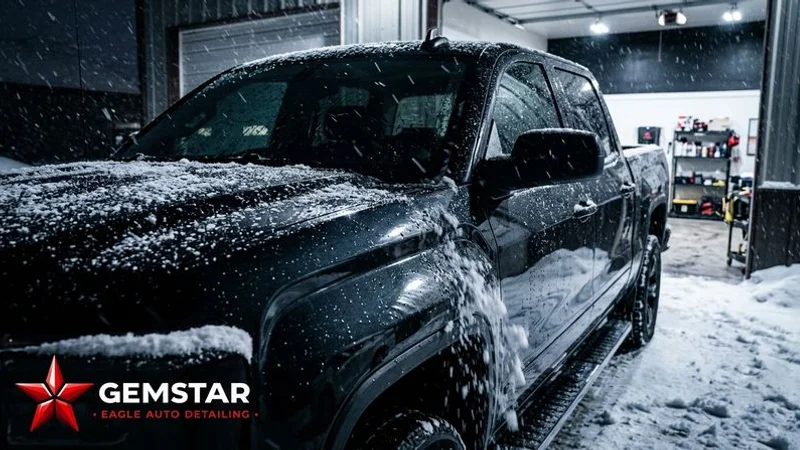
The Treasure Valley’s winters bring freezing temperatures along with harsh road treatments like magnesium chloride. Municipalities across Ada and Kootenai counties apply this liquid brine heavily because it effectively melts ice at lower temperatures.
This chemical acts as a highly corrosive, hygroscopic salt that clings to the surface of your car.
Our detailers observe the damage these winter road salts cause if left unwashed. While a ceramic layer creates a chemical-resistant barrier, repeated exposure allows these substances to sit on the clear coat and slowly compromise the integrity of the protection.
To combat this, you should watch out for the three most common local winter chemicals:
- Magnesium Chloride Brine: Highly corrosive and sticky.
- Calcium Chloride Pellets: Creates intense heat but eats away at clear coats.
- Traditional Rock Salt: Causes microscopic scratches if rubbed during washing.
Regular winter washing becomes absolutely essential to neutralize these corrosive agents.
Temperature Swings
Idaho experiences dramatic temperature shifts, sometimes dropping 40 or 50 degrees in a single day during spring and fall. These rapid changes cause paint and protective layers to expand and contract rapidly, which stresses the bond over time.
We choose professional-grade products because they are engineered with advanced polymers to flex safely with your vehicle’s paint. Lower-quality consumer sprays simply lack this elasticity and may crack or delaminate under these harsh thermal conditions.
This constant thermal shock is exactly why local applications require premium chemistry.
Factors That Determine Longevity
Quality of the Coating Product
Not all protective solutions deliver the same results. Consumer-grade spray products from auto parts stores might last a few months at best because they lack concentrated silicon dioxide. Professional formulas require controlled application environments and multi-layer builds to deliver dramatically longer protection.
We use only top-tier professional products at Gemstar Eagle. High-end brands contain advanced polymers designed specifically to resist damage from environmental effects, ensuring a thicker, more durable sacrificial layer.
Surface Preparation
This step is arguably the most critical factor in determining how long does ceramic coating last in Idaho. A protective layer is only as good as the surface beneath it, meaning maximum adhesion requires a perfectly bare, smooth clear coat.
Expert Insight: In the Boise area, professional paint correction costs anywhere from $500 to over $1,500, depending on whether a vehicle needs a single-stage polish or a multi-stage compound process to remove deep defects.
We always recommend paint correction before any ceramic coating application. If the paint retains contaminants, swirl marks, or oxidation that were not properly addressed, the chemical bond remains weak and the protection will fail prematurely.
Investing in proper preparation guarantees you get the maximum lifespan out of your top coat. Learn more in our guide on whether you need paint correction before ceramic coating.
Maintenance Routine
A coated vehicle still needs regular washing, ideally every two weeks. The standard recommendation is to use the two-bucket wash method with a Grit Guard insert placed at the bottom of the buckets.
This simple plastic grate acts as a barrier to trap abrasive dirt and sand safely underwater, preventing you from dragging grime back across your pristine paint.
Our team stresses the importance of using pH-neutral car wash soap. Automatic car washes with abrasive brushes will rapidly strip away the hydrophobic properties and inflict deep swirl marks.
Applying a dedicated silica boost spray every few months keeps the surface performing at its absolute peak for years.
Signs Your Ceramic Coating Is Wearing Down
Even the best applications will eventually need renewal as the sacrificial layer takes the brunt of daily driving. You will notice specific changes in how your vehicle’s exterior behaves when the protection starts to diminish.
- Visible water spots: The Boise area has a moderate to hard water rating of about 108 PPM, or 6 to 9 Grains Per Gallon (GPG). If hard tap water forms spots that do not rinse away easily, the protective barrier is no longer repelling minerals adequately.
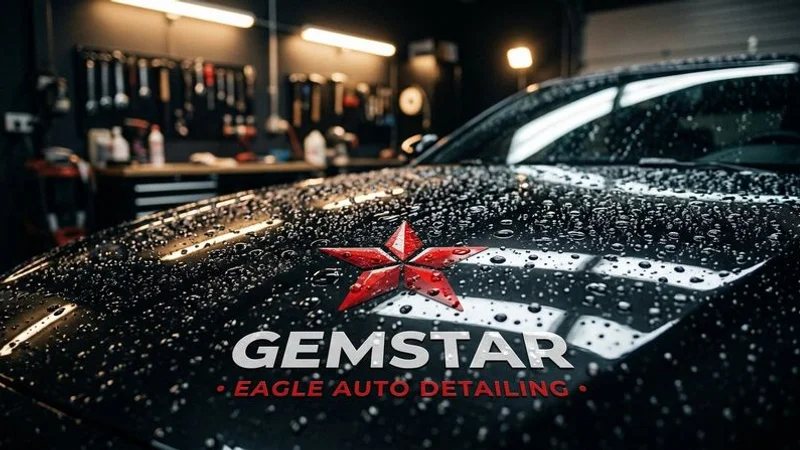
- Reduced water beading: When rain no longer forms tight, uniform beads and instead sheets flatly across the surface, the hydrophobic tension is actively degrading.
- Increased difficulty cleaning: If road tar, bugs, and traffic film are starting to stick stubbornly, the self-cleaning effect is fading.
- Loss of gloss depth: A well-maintained exterior produces a rich, candy-like gloss that looks continually wet. When that visual depth starts to flatten and look dull, a reapplication is likely necessary.
How to Maximize Your Coating’s Lifespan in Idaho
Based on our experience protecting luxury vehicles across Ada County, specific maintenance habits yield the best results. Implementing a few simple routines will stretch your investment as far as possible.
- Wash every two weeks using the two-bucket method, ensuring you use a Grit Guard to trap abrasive dirt particles safely at the bottom of the bucket.
- Avoid automatic car washes with spinning brushes, as the aggressive friction acts like sandpaper against the thin silica layer.
- Park in a garage whenever possible to shield the vehicle from Boise’s extreme summer UV index of 11.
- Apply a ceramic boost spray quarterly to refresh the hydrophobic tension and add a temporary layer of slickness.
- Schedule an annual inspection with your detailer to chemically decontaminate the paint and assess the remaining thickness.
When to Reapply
Most of our Treasure Valley clients come back for a thorough refresh or full reapplication every three to four years. Vehicles that stay garaged and receive proper two-bucket hand washes can easily stretch that timeline to five years.
Pro Tip: Do not assume a coating has failed just because water stops beading. Often, a professional chemical decontamination will unclog the microscopic pores and restore the hydrophobic properties completely.
We offer comprehensive maintenance packages specifically designed to evaluate and extend your coating’s life. Professionals can often perform a light chemical wash to bring back that original slickness without requiring a costly full reapplication.
You can visit our ceramic coating service page or call us at (208) 953-9102 to discuss your vehicle’s specific needs.
Investing in professional paint protection is one of the smartest decisions you can make to preserve your vehicle in Idaho.
The combination of intense summer sun and harsh winter road salts makes a durable barrier an absolute necessity.
We know that proper preparation and consistent maintenance guarantee years of stunning shine.
If you want to stop wondering how long does ceramic coating last in Idaho and start experiencing the benefits, reach out to schedule an evaluation today.
Tags
Related Service
Learn More About Our Ceramic Coating Service → About Justin
Co-Founder & Lead Detailing Specialist at Gemstar Eagle Auto Detailing
Co-founder of Gemstar Eagle with 15+ years in professional auto detailing.
Related Articles
Ceramic Coating vs. Wax: Why Eagle Residents Are Switching
Discover why more Eagle, Idaho drivers are choosing ceramic coating over traditional wax. Compare durability, protection, cost, and long-term value for your vehicle.
How Much Does Ceramic Coating Cost in Eagle, Idaho?
Get a clear breakdown of ceramic coating costs in Eagle, Idaho. Understand what affects pricing and how to choose the right package for your vehicle.
Do You Need Paint Correction Before Ceramic Coating?
Find out why paint correction before ceramic coating is essential for the best results and what happens if you skip this critical step.
Ready to Book Your Detail?
Put your knowledge into action. Schedule a premium mobile detail with Gemstar Eagle today.